- Rise & Recap
- Posts
- U.S.-China Pact, Fertility Crisis And Financial Perks, & How States Tip
U.S.-China Pact, Fertility Crisis And Financial Perks, & How States Tip
Plus, dating app that matches you based on browsing history!
Good Morning!
It's Thursday, June 12, and in today’s edition of Rise & Recap, we look at:
TU.S.-China deal is finalized, but confusion looms.
Can financial perks solve the fertility crisis?
The best and worst tipping states.
Love this newsletter? Don’t keep it all to yourself—share it with your friends!
Help us be better, write at: [email protected]
Spill The News
U.S.-China (Finally) Have a Deal
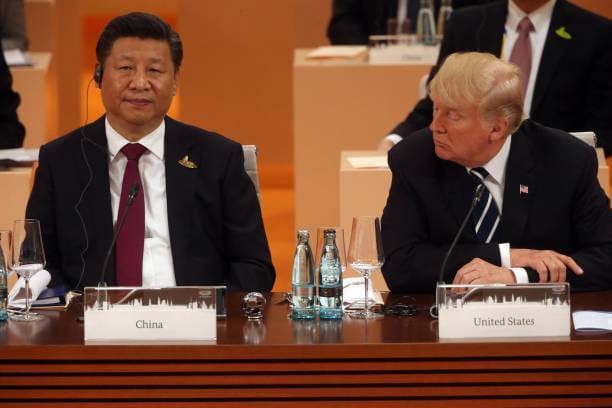
President Donald Trump announced on Wednesday that a new trade agreement with China was finalized. Under the deal, China will supply magnets and rare earth minerals, while the U.S. will continue allowing Chinese students to study at American colleges and universities. On his social media app Truth Social, Trump said, “WE ARE GETTING A TOTAL OF 55% TARIFFS, CHINA IS GETTING 10%. RELATIONSHIP IS EXCELLENT!” An analysis on Trump’s China truce.
While he didn’t offer further details, a White House official told Reuters that the U.S. will impose a total 55% tariff on Chinese imports. This includes a 10% baseline “reciprocal” tariff, an additional 20% for fentanyl trafficking, and a 25% tariff that reflects existing trade measures. China, in turn, will apply a 10% tariff on U.S. goods. What’s the key U.S. disadvantage in the deal?
Rare earths, vital to tech manufacturing, were the key issue that collapsed the May tariff truce between the U.S. and China. That Geneva deal had temporarily lowered tariffs for 90 days and included China easing its rare earth export controls. But tensions quickly reignited, with the U.S. even threatening to revoke Chinese student visas. A call between Trump and Xi last week led to renewed talks in London.
Related Read:White House says Trump open to talks with Kim Jong Un.
Inflation Remains Muted; Tariff Impact Limited
U.S. businesses have warned for months that Trump’s tariffs would lead to higher prices. But so far, the impact appears limited. The Consumer Price Index rose 2.4% in May from a year earlier, slightly above April’s 2.3%. Moreover, core inflation, which excludes food and energy, held steady at 2.8%. This is a key figure watched by policymakers for signs of broader price pressure. Inflation remained muted in May, with both the overall and core indexes rising just 0.1% from April — below economists’ expectations.
The data, released by the Bureau of Labor Statistics, paints a mixed picture of Trump’s shifting tariffs. While many businesses say they’ll raise prices, the impact hasn’t fully materialized yet. A New York Fed survey found most firms passed on at least some tariff costs. Nearly half of service companies and a third of manufacturers raised prices accordingly. The Fed’s Beige Book echoed this trend, citing “widespread reports of contacts expecting costs and prices to rise at a faster rate going forward,” with many planning increases “within three months.”
Still, the latest numbers show limited inflationary pressure. Prices for tariff-sensitive goods like furniture fell 0.8% in May — the lowest since December. Clothing prices dropped 0.4%, while both new and used car prices also declined.
One of the major reasons for the shrinking budget deficit for the month is US customs duties, which climbed to a record in May. The Treasury Department collected $23 billion in customs duties in May — a 270% jump from last year and triple 2024’s monthly average.
Can Fertility Crisis Be Solved With Financial Perks?
A new UN Population Fund report says addressing the global fertility crisis requires policies that support parenting — such as better childcare, healthcare, and work-life balance — rather than relying on economic incentives. The study finds that many countries' strategies, like fertility targets and family bonuses, often fail to deliver lasting impact and can sometimes backfire. It stated, “Even when states provide financial incentives or other measures intended to boost fertility, they are not creating the full range of enabling conditions.”
The UNFPA partnered with YouGov to survey over 14,000 people across 14 countries. Of the 10,000 who wanted children, nearly 40% said financial constraints were stopping them from reaching their ideal family size. Others cited gender inequality and future uncertainty.
“This crisis is not rooted in individual reproductive decisions,” the report concludes, but in systems that “failed to create the economic security and personal empowerment” people need to form families.
Click-Worthy
🎓 Whole Fulbright board quits after Trump aides cancel 200 scholar grants.
❤️ This dating app matches singles based on their browsing history!
📞 Elon Musk spoke with Trump on call before his “I regret” tweet.
🫐 From blackberries to spinach — additions to the ‘Dirty Dozen’ list.
🧨 Why are there riots in Northern Ireland?
💸 Best to worst — how states tip.
🌞 View the first images of the Sun's south pole ever released.
⚖️ Judge orders release of ex-Columbia student Mahmoud Khalil from ICE.
🌍 Global poll labels Trump “arrogant”, “dangerous”, yet “strong”.
🌪️ Trump plans “phasing out” FEMA after hurricane season.
Her Hustle

📉 Entry-level job confidence hits all-time low as layoffs, AI threats, and slow hiring stall career hopes.
☀️ Morning feedback works better since brains are fresher, moods are calmer, and the post-lunch slump hasn’t hit like a wrecking ball.
The Glow Guide
🧴 Sagging skin isn’t just age — it’s habit. A few expert-backed changes might be all it takes to tighten things up.
👁️ Tired eyes, surprise zits, uneven skin?These color correctors fix it all and still leave room for your concealer.
The Fame Frame
🎶 ‘The Beach Boys’ founder and singer Brian Wilson dies at 82.
🤖 Disney and NBCUniversal sue AI company for stealing copyrighted characters.
🎤 Big news for K-pop fans as BTS stars complete military service.
💃 Where do Taylor Swift and Blake Lively stand amid dismissed lawsuit?
🎭 Melania and Donald Trump booed at Kennedy Center.x
Weigh In
Mark Zuckerberg’s vision of the metaverse is facing fire — especially from women. The metaverse was pitched as a brave new world. But for many women, it’s a digital minefield. A new Guardian investigation exposes how Meta’s virtual spaces are rife with misogyny — from groping avatars to hostile design choices. Critics say the platform reflects the real-world biases of the men building it. As Meta scales up, some are asking: is this future already broken?
What do you think? |
“It is not the mountain we conquer, but ourselves.”
— Sir Edmund Hillary
Thank you for your time! Rise & Recap works towards delivering a daily newsletter to keep America informed — covering everything from coast to coast and beyond — all in one well-curated newsletter!
How do you feel about this edition of Rise & Recap? |